

Zabuton is a traditional Japanese sitting equipment and is a type of futon. It’s thin and small, but the more you explore it, the deeper it becomes, and it’s filled with a lot of things.
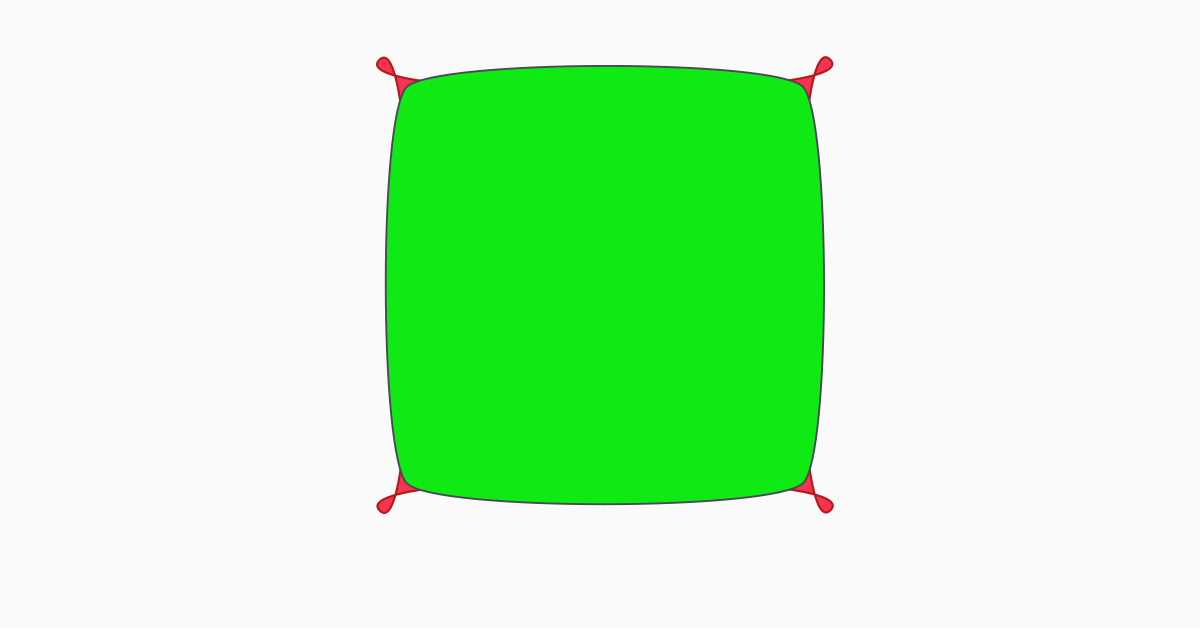
Zabuton is square or nearly so. In addition to square shapes, there are rectangular and circular shapes as well.
Traditionally, the material is cotton or linen, with cotton stuffing inside. In recent years, polyester is sometimes used for the fabric and sponge or polyester for the filling.
There are various types of zabutons, such as soft ones, hard ones, thick ones and thin ones.
Design and meaning of Zabuton
The “za” (座) in zabuton means to sit. In other words, a zabuton is a futon for sitting on.
Zabutons are traditional Japanese cushions, so the fabric patterns and decorations are distinctive as well.
Japan is rich in seasonal changes, which are closely related to the Japanese sense of beauty. Zabutons with patterns that match the seasons, such as cherry blossoms in spring or autumn leaves, look great and soothe people’s hearts.
In addition, crane and turtle designs are considered to be very auspicious, symbolizing longevity and happiness.
The corner tassels (sumifusa) on the zabuton are meant to prevent evil spirits from entering the person sitting on it. Evil exorcisms are not just for zabutons, and tassels are used on fukusa, weapons (swords, armours), and sumo wrestling rings as well.
In recent years, a wide variety of designs other than traditional Japanese patterns have been seen.
Zabutons are comfortable and convenient to sit on, but not just a tool and they also enhance the atmosphere as decorations of Japanese-style interiors. Additionally, zabutons are deeply related to Japanese traditional culture and are imbued with various meanings.
Zabutons are rooted in Japanese life, and are closely related to Japanese traditional culture, making them inseparable.
Sizes of Zabuton
The traditional zabuton sizes are as follows.
Chasekiban (茶席判): 43 cm x 47 cm
Momenban (木綿判): 51 cm x 55 cm
Meisenban (銘仙判): 55 cm x 59 cm
Hattanban (八端判): 59 cm × 63 cm
Donsuban (緞子判): 63 cm x 68 cm
Meotoban (夫婦判): 67 cm x 72 cm
Japanese Industrial Standards (JIS)
According to the Japanese Industrial Standards (JIS), the size S of zabutons corresponds to “Momenban,” the size M corresponds to “Meisenban,” and the size L corresponds to “Hattanban.”
S: 51 cm × 55 cm
M: 55 cm × 59 cm
L: 59 cm × 63 cm
When using cotton futon padding, the contents are as follows:
S: 1.0 kg or more
M: 1.2 kg or more
L: 1.5 kg or more
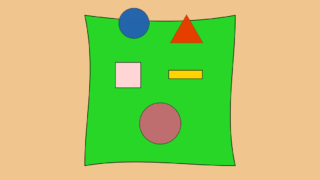
Zabuton sizes of Japanese Industrial Standard (JIS)
Meat called Zabuton
The meat from the rib bone side of beef shoulder loin is commonly called “zabuton.” The cut out appearance is square and resembles a “zabuton.”
It’s the marbled meat with abundant fat and the fat is rich, yet it has a mellow and refreshing taste. One beef’s shoulder loin weighs around 20 kg, but the zabuton is a rare part that weighs only 3 to 4 kg, making it a high-class ingredient. It’s popular for grilled dishes.
It’s also called “haneshita,” “chuck flap,” “special roast” and “special rib.”
Comparison of Western lifestyle and Zabuton
Zabuton is sometimes referred to as a “floor cushion” in the West. It means a cushion to be placed on the floor.
While similar in shape and size to Western cushions, zabutons are flat and not as round as cushions, and less elastic as cushions. That’s because the purpose of use is different.
In the West, cushions are placed and used on sofas as backrests or armrests, whereas zabutons are primarily used for sitting on the floor or tatami mats.
In the West, people enter homes with shoes on and sit on chairs or sofas, whereas in Japan, people take off their shoes before entering homes and sit directly on the floor or tatami mats.
However, sitting directly on the floor or tatami mats for extended periods can cause fatigue and leg pain, so zabutons are used to make sitting more comfortable.
As chair-sitting culture has become popular in Japan, the use of zabutons on wooden or metal chairs is increasing.
However, even modern houses may have traditional Japanese rooms, where it’s common to sit on zabutons as chairs are not suitable for tatami mats.
Roots of Zabuton
Not many detailed documents on the origin of zabuton are remaining. To put it the other way around, it suggests that zabutons have a long history. It’s believed that in ancient Japan, people sat on something like a primitive form of zabuton made of natural grass or rice straw on the floor.
The floor could be hard or cold, so the role was to alleviate that.
Eventually, cotton and linen came to be used, and high-end zabutons with luxurious embroidery became prized in noble homes and courts. Zabutons have long had the meaning to symbolise the authority of the rulers of the times and religious leaders.
It’s said that zabuton was established during the Kamakura period (1185-1333). It is a thin, square tatami mat whose rims are decorated with cloth, and is called shitone (茵).
Eventually, it became a circular shape woven in a swirling manner with ropes of rushes or straw, which is called an enza (円座).
The current form emerged in the middle of the Edo period (1603-1868), filling cloth bags with cotton. Around that time, as the living standard for commoners rose, zabutons began to become common.
From the Taisho period (1912-1926) to the end of World War II, with dramatic advancement in production technology, zabutons became even more widespread among citizens.
When air raids on mainland Japan began during World War II, 2 zabutons were sewn together to create an improvised disaster hood. This cushioned the impact of an incendiary bomb, and by soaking it with water, it was effective in protecting the head from the heat in a city that had turned into a sea of flames.
It can be said that zabutons are deeply rooted in Japanese culture and lifestyle from ancient times to the present.
Zabuton and Japanese traditional culture

Zabuton and Tatami mats: The close relationship

What is Tatami? Craftsmanship that breathes to this day

What is Mushiro? Rug passed down from time immemorial

What is Futon? Magical and freely foldable bedding

Author: Takuya Nagata. Amazon Profile
Follow @nagatackleA novel writer and creator. Graduated from UCA, the UK’s university. Discussed Japanese minimalism in the senior thesis. Founder of “MINIRISM” (minirism), the art movement that contributes to the development of societies, such as ecology and lifestyle. Later opened the knowledge hub “The Minimalist.”
Once travelled to Brazil and trained football at CFZ do Rio (Centro de Futebol Zico Sociedade Esportiva) in Rio de Janeiro. Played soccer for the Urawa Reds (Urawa Red Diamonds), one of the biggest football clubs in Japan, and toured Europe. Retired at a young age and voyaged alone to England. Established careers as a journalist, football coach, consultant, etc. across Europe such as Spain. The founder of “Propulsive Football” (PROBALL), the world’s first-ever competitive mixed football, facilitating diversity and spirit for equal participation in society.
Knowledgeable in creative and technology fields as well. Launched the SPACE Culture & Entertainment hub “The Space-Timer 0.”
https://www.amazon.co.uk/Takuya-Nagata/e/B09LM3Z89P
https://x.com/nagatackle
https://www.instagram.com/nagatackle
https://www.facebook.com/takuya.nagata.794
https://www.linkedin.com/in/takuya-nagata-5730b069

